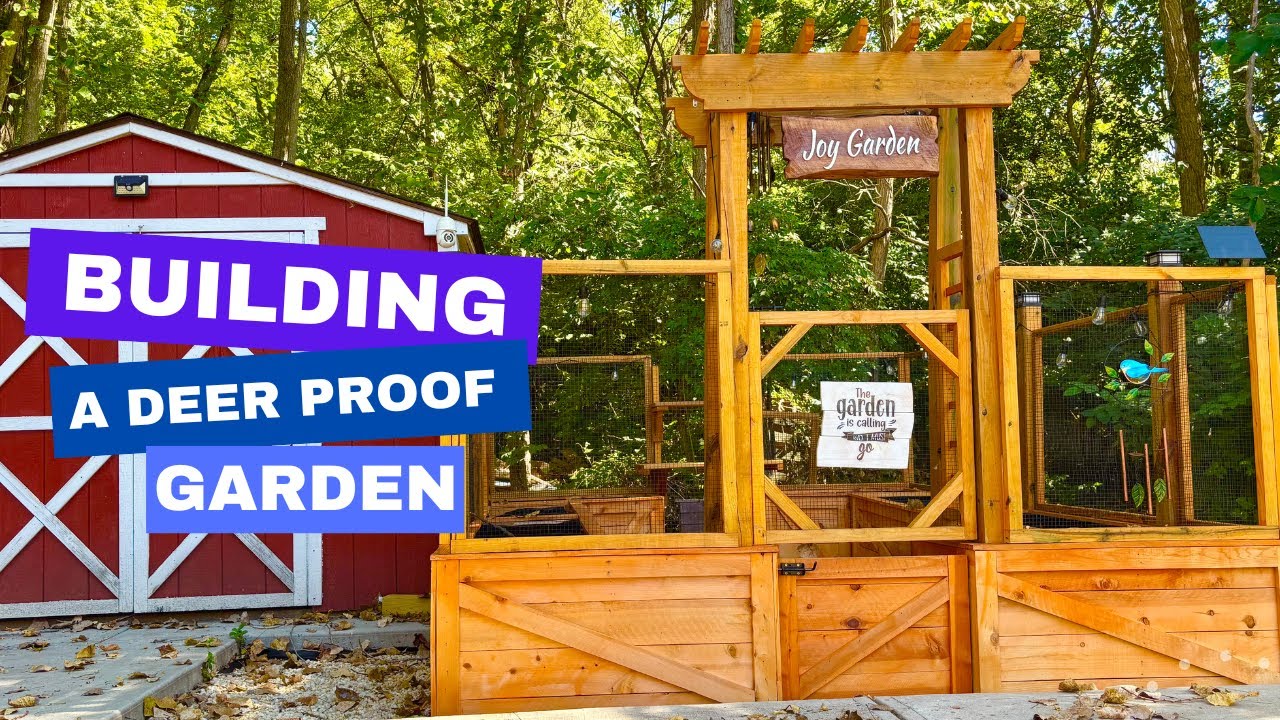
The Initial Reconnaissance: More Than Just a "Quick Visit to the Land This Week"
Embarking on any significant outdoor project, especially one as crucial as building a deer-proof garden fence, often begins with an essential first step: a site visit. More than just a casual check-in, a quick visit to the land this week can be a strategic reconnaissance mission. It's an opportunity to reacquaint yourself with the terrain, assess the current state of affairs, and drop off vital supplies that lay the groundwork for future construction. This preparatory phase is invaluable for ensuring your project kicks off on the right foot, saving time and potential headaches down the line.
For instance, checking on existing plant life, like a newly planted tree, offers immediate feedback on the land's conditions and highlights areas of vulnerability. Such a visit isn't just about admiring progress; it's about evaluating the challenges. Observing the delicate state of young saplings, or the potential for local wildlife to browse, underscores the urgency and necessity of robust protective measures. Every detail, from the health of your plants to the lay of the land, contributes to the overall understanding needed to design an effective and enduring garden barrier.
Unmasking Your Garden Intruders: The Indispensable Role of Wildlife Cameras
Before you even think about pounding the first fence post, truly understanding your garden's adversaries is paramount. What kind of wildlife frequents your property? What are their habits, their preferred entry points, and their feeding times? This intelligence is where modern technology shines. Setting up wildlife cameras on your land transforms a passive assumption into an active, data-driven strategy for garden protection.
Imagine having a silent sentinel watching over your property 24/7. Trail cameras, like the motion-activated Trace models or the versatile Wingscapes/Moultrie-based time-lapse cameras, are game-changers for any gardener. Motion-activated cameras capture high-resolution photos or videos every time an animal crosses their path, providing irrefutable evidence of who's visiting and when. Are deer your primary concern, or are smaller critters like bunnies, raccoons, or groundhogs causing havoc? The footage will tell the tale. These cameras serve a dual purpose, not only documenting wildlife activity but also enhancing land security by monitoring any unusual human presence. For a deeper dive into setting these up, read our guide on Setting Up Wildlife Cameras: First Look & Land Security.
Moreover, time-lapse cameras offer a fascinating long-term perspective. Positioned to capture broad sweeps of your property, they can document environmental changes, monitor construction progress, and eventually, chronicle the growth of your garden once it's established. The ability to watch a season unfold in minutes provides invaluable insights into light patterns, water flow, and how the landscape interacts with your future garden. This comprehensive surveillance provides the critical data needed to tailor your fence design to the specific threats and conditions of your unique plot, ensuring every design choice is backed by observed evidence rather than guesswork.
Designing the Ultimate Deer-Proof Garden Fence: Balancing Height, Critters & Cost
The quest for a truly deer-proof garden fence quickly reveals itself as a multi-faceted challenge. It's not just about keeping one type of animal out; it's about creating an impenetrable barrier against a spectrum of potential intruders, all while grappling with the realities of cost and material availability. The primary nemesis, deer, demands considerable height. Industry standards typically recommend a fence of at least 7 to 8 feet tall to deter even the most determined jumpers. Anything less often proves to be merely a temporary inconvenience for a hungry deer.
However, focusing solely on height neglects the threat posed by smaller, ground-dwelling critters. Rabbits can squeeze through surprisingly small openings, while groundhogs and moles can tunnel underneath. This means your fence needs a robust, small-mesh foundation that extends both above and ideally, below ground level. The challenge intensifies when you consider sourcing materials. As many DIY builders quickly discover, finding rolls of wire fencing that are a full 8 feet tall is remarkably difficult and often prohibitively expensive. Doubling up shorter rolls might seem like a solution, but the math rarely adds up favorably. Not only does it increase material cost and installation time, but it also often leads to significant waste. This realization underscores a critical lesson for any substantial outdoor build: fencing is not cheap, and efficient material usage is key to staying within budget.
This reality forces creative problem-solving. A complete, uniform wire mesh fence from top to bottom, while ideal for universal critter protection, often becomes impractical due to cost, availability, and the sheer labor involved in installation. Gardeners must weigh the aesthetic impact, the specific wildlife pressures observed through their camera surveillance, and, of course, the financial investment. It's a delicate balance between achieving the necessary protection and ensuring the project remains viable, often leading to innovative, hybrid solutions.
The Hybrid Approach: A Practical Solution to Multi-Layered Protection
Faced with the challenges of sourcing tall, affordable wire mesh and the dual threat of deer and smaller animals, a hybrid fence design emerges as an intelligent and often more economical solution. This approach creatively combines different materials to address specific threats while optimizing for cost and ease of construction. A popular and effective hybrid strategy involves building a sturdy 4-foot wire mesh fence at the bottom, then extending the height with additional materials, such as wooden boards or additional wire, in a distinct pattern above. This ingenious design offers a practical blueprint for tackling both deer and critter challenges simultaneously.
Implementing the Hybrid Fence Design: Tips and Considerations
- Foundation First: The 4-foot wire mesh at the base is crucial for deterring smaller animals. Opt for a heavy-gauge, galvanized wire mesh with openings no larger than 1-2 inches to prevent bunnies, raccoons, and other small creatures from squeezing through. Consider burying the bottom 6-12 inches of the mesh to prevent tunneling pests.
- Strategic Height Extension: Above the mesh, you can strategically use boards, sturdy cattle panels, or even high-tensile wire strands to achieve the desired 7-8 foot total height. Boards offer a more solid visual barrier, which can be an additional deterrent for deer as they dislike jumping into unknown spaces. They also provide a more aesthetic appeal, blending naturally into a rustic landscape. If using boards, ensure they are securely fastened to robust posts at regular intervals to withstand potential deer impact.
- Post Selection and Spacing: Given the significant height and potential for wildlife pressure, invest in strong, treated wooden posts or heavy-duty metal posts. Space them appropriately (typically 8-10 feet apart) to provide adequate support for both the wire mesh and the upper board section. Proper post installation, ideally set in concrete, is non-negotiable for long-term stability.
- Gate Design: Don't overlook the gate! It's often the weakest link in any fence. Your gate must match the height and strength of the rest of the fence, featuring the same small-mesh base and a tall, sturdy upper section. Ensure latches are robust and easy to operate but secure against animal intrusion. Double-gating (an outer gate and an inner one) can add an extra layer of protection, particularly if you anticipate frequent human traffic.
- Aesthetic Integration: While functionality is paramount, the visual impact of your fence matters. Wooden boards can be stained or painted to complement your property's aesthetic. Even wire mesh can be softened with climbing plants once the garden is established, turning a defensive structure into a living part of your landscape.
- Ongoing Observation: Remember, even the best-laid plans are experiments in the field. Utilize your wildlife cameras to monitor the fence's effectiveness once it's built. Are deer testing new spots? Are smaller animals finding unexpected entry points? This feedback loop allows for continuous improvement and minor adjustments, ensuring your garden remains a sanctuary.
Building a hybrid fence is certainly a multi-weekend process, often requiring the helping hands of friends, but the investment in time and effort pales in comparison to the peace of mind it brings. It's about creating a sustainable barrier that protects your efforts and allows your garden to flourish unmolested.
Conclusion: The Reward of Diligent Planning and Persistent Building
Constructing a deer-proof garden fence is a significant undertaking, but one that promises immense rewards for any aspiring gardener or landowner. As we've seen, it all starts with diligent planning, informed by crucial reconnaissance like a quick visit to the land this week, and critical data gathered from wildlife cameras. Understanding your local ecosystem and the specific challenges it presents is the foundation upon which effective protection is built. By embracing a flexible, hybrid design approach that tackles both the height requirements for deer and the small-mesh needs for critters, you can create a robust, cost-effective, and enduring barrier. The journey from conceptualization to the final post involves overcoming material challenges, making strategic design choices, and committing to a multi-phase build. But with every secured section, you're not just building a fence; you're building a sanctuary where your garden can thrive, safe from unwelcome visitors, allowing your hard work to truly blossom.
